ge top load washer manual
GE Top Load Washer Manual: A Comprehensive Guide
Welcome! This manual assists in mastering your GE top load washer’s functions. It details operation, features, and troubleshooting, referencing models from January 2018 onwards.
Understanding Your Washer’s Basics
Your GE top load washer is designed for efficient and reliable cleaning. Familiarizing yourself with its core components is crucial for optimal performance. The washer utilizes load sensing technology, dynamically adjusting water levels and wash times based on the size of each load – optimizing resource use and cleaning effectiveness.
The power button activates the display panel, but importantly, doesn’t disconnect the appliance from the power source. Always remember this for safety. The lid lock feature is a key safety mechanism; the lid must be closed for most cycles to initiate, and an “Lid” message will appear if it’s open. This prevents interruptions during operation.
Understanding the detergent dispenser is also vital. Refer to the dedicated section for proper usage. The washer’s internal components work in concert to deliver a thorough clean, and this section provides a foundational understanding of how they interact. Features and appearance may vary slightly depending on your specific model, as noted in technical service guides.
Powering On and Off
Activating your GE top load washer is straightforward, yet understanding the nuances is important for safe and efficient operation. Pressing the Power button initiates the display panel, bringing the washer to a ready state. However, a critical point to remember is that pressing Power does not disconnect the appliance from the main power supply. This is a crucial safety consideration.
To fully de-energize the washer, you must unplug it from the electrical outlet. The display will illuminate when powered on, providing access to cycle selections and settings. The washer is designed to ‘wake up’ from a standby mode with a single press of the Power button, offering convenient operation.
Avoid repeatedly pressing the Power button in quick succession, as this may not reliably turn the unit off. Always confirm the display has deactivated before assuming the washer is in a non-operational state. Refer to the troubleshooting section if the display fails to activate after pressing Power.
Cycle Selection Overview
Your GE top load washer offers a diverse range of wash cycles designed to cater to various fabric types and cleaning needs. These cycles are easily selected via the control panel, providing customized washing experiences. Common cycles include Normal, Delicates, Heavy Duty, Quick Wash, and Bulky Items. Each cycle is pre-programmed with specific wash actions, spin speeds, and water temperatures.
The Normal cycle is ideal for everyday laundry, while Delicates provides gentle cleaning for fragile items. Heavy Duty tackles heavily soiled clothes, and Quick Wash offers a faster cleaning option for lightly soiled loads. The Bulky Items cycle, notably, requires the lid to remain open unless specifically selected, ensuring proper operation.
Beyond these standard options, some models may include specialized cycles like Whites, Colors, or Sanitize. Always consult the full cycle guide within this manual to understand the optimal settings for your laundry. Proper cycle selection maximizes cleaning performance and protects your garments.
Load Sensing Technology
GE top load washers incorporate advanced Load Sensing Technology to optimize water levels and wash times, enhancing efficiency and fabric care. During the initial phase of the wash cycle, sensors meticulously measure the size and weight of the laundry load. This data is then used to automatically adjust the water level, ensuring only the necessary amount is used – preventing water waste and maximizing cleaning performance;
Furthermore, the technology dynamically adjusts the wash and rinse times based on the detected soil levels. Sensors continuously monitor the water for detergent and particulate matter, extending wash times for heavily soiled loads and shortening them for lightly soiled ones.
This intelligent system delivers a thorough clean while conserving resources. The load sensing process occurs silently and automatically, providing a convenient and effective laundry experience. It’s a key feature contributing to the washer’s overall efficiency and user-friendliness;

Lid Lock Feature and Safety
Your GE top load washer is equipped with a Lid Lock feature, a crucial safety mechanism designed to prevent accidental openings during operation. This feature automatically locks the lid once the wash cycle begins, and remains engaged until the cycle is complete or paused. The lid will not unlock mid-cycle, even if power is interrupted, ensuring user safety.
If the lid is opened during operation, the display panel will show “LId” scrolling across the screen, indicating the lock is active. Do not attempt to force the lid open. The lid lock is essential, particularly during the high-speed spin cycle, to prevent injury.
However, the Bulky Items cycle is an exception; unless this cycle is selected, the lid must be closed for the washer to start. This feature prioritizes safety while accommodating larger items. Always ensure children and pets are kept away from the washer during operation.
Starting a Wash Cycle
Beginning a wash cycle with your GE top load washer is straightforward. First, ensure the washer is powered on by pressing the Power button – this activates the display panel. If the display is already active, a single press will put the washer into standby mode. Remember, pressing Power doesn’t disconnect the appliance from the power source.
Next, load your laundry, add detergent using the dispenser (refer to the Detergent Dispenser Guide for proper usage), and select your desired wash cycle. Once the cycle is chosen, verify the lid is securely closed. Unless the Bulky Items cycle is selected, the washer will not initiate if the lid is open; the display will indicate “LId”.
Finally, press the Start button to begin the cycle. The washer will then proceed through its phases, including sensing the load and adjusting settings accordingly.
Available Wash Cycles
Your GE top load washer offers a variety of wash cycles to accommodate different fabric types and cleaning needs. While specific cycles may vary by model, common options include Normal, Delicates, Heavy Duty, Quick Wash, and Bulky Items. The Normal cycle is ideal for everyday laundry, while Delicates provides gentle cleaning for fragile items.
Heavy Duty is designed for heavily soiled clothes, offering a more vigorous wash action. Quick Wash provides a faster cycle for lightly soiled items when time is limited. The Bulky Items cycle is specifically designed for larger items like blankets or comforters, and notably, allows operation with the lid open during certain phases.
Additional cycles might include Whites, Colors, Sanitize, and Rinse & Spin. Always consult your model’s specific documentation for a complete list and detailed descriptions of each cycle’s settings and recommended uses. Proper cycle selection ensures optimal cleaning and fabric care.
Detergent Dispenser Guide
The detergent dispenser on your GE top load washer is designed for efficient and convenient detergent usage. Typically, it features separate compartments for powdered or liquid detergent, fabric softener, and bleach. Always refer to your specific model’s diagram, as dispenser layouts can vary.
For optimal results, use only HE (High Efficiency) detergent, as standard detergents can create excessive suds and impact wash performance. Fill the detergent compartment according to the detergent manufacturer’s instructions and the load size. Avoid overfilling, as this can lead to residue.
The fabric softener compartment prevents direct contact between softener and clothes, ensuring even distribution. Bleach should be diluted with water before adding to its designated compartment. Regularly clean the dispenser to prevent clogs and ensure proper function. A clean dispenser contributes to a cleaner wash.
Understanding the Display Panel
Your GE top load washer’s display panel provides crucial information and control over your wash cycles. Upon pressing the “Power” button, the display activates, showing the selected cycle, remaining time, and any active error codes. The panel utilizes a combination of buttons and, in some models, a touchscreen interface.
Cycle selection buttons allow you to choose the appropriate wash cycle for your load. Modifier buttons adjust settings like temperature, spin speed, and soil level. The display clearly indicates the selected options. During operation, the display shows the cycle stage – wash, rinse, or spin – and the estimated time remaining.
If the lid is open during a cycle, “Lid” will scroll across the display, pausing operation for safety. Error codes, if present, will also appear, prompting you to consult the troubleshooting section of this manual. Familiarizing yourself with the display panel enhances your washing experience.
Troubleshooting Common Issues
Encountering issues with your GE top load washer is often easily resolved. If the washer doesn’t start, ensure the lid is securely closed – the “Lid” indicator on the display confirms this. Check the power supply and ensure the washer is plugged in; pressing “Power” only activates the display, not the power source.
For drainage problems, verify the drain hose isn’t kinked or clogged. A slow drain might indicate a blockage in the pump filter, requiring cleaning. Excessive vibration suggests an unbalanced load; redistribute items within the drum. If error codes appear, refer to the dedicated “Error Codes and Their Meanings” section for specific guidance.
Detergent residue can occur with excessive soap use; adjust dispenser levels accordingly. If issues persist, consult the full technical service guide (31-9281) for more in-depth troubleshooting steps. Remember safety first – disconnect power before any internal inspection.
Error Codes and Their Meanings
GE top load washers utilize error codes to diagnose internal issues. While specific codes vary by model, understanding their general meaning is crucial. A flashing “Lid” code consistently indicates the lid isn’t properly closed, preventing operation for safety reasons. Other codes relate to water supply – insufficient water pressure can trigger an error, requiring a check of inlet connections.

Drainage errors are common, often signaled by codes indicating pump malfunctions or blockages. These necessitate inspecting the drain hose and pump filter. Motor-related errors suggest potential mechanical failures, requiring professional service. Sensor errors, linked to load sensing technology, may indicate calibration issues.
Consult the technical service guide (31-9281) for a comprehensive list of codes specific to your model. Note the code, then attempt basic troubleshooting before contacting a technician. Always disconnect power before attempting any internal repairs. Ignoring error codes can lead to further damage.
Cleaning and Maintenance
Regular cleaning extends your GE top load washer’s lifespan and maintains optimal performance. Monthly, run an empty hot water cycle with a washing machine cleaner to remove residue buildup. Wipe down the exterior with a damp cloth and mild detergent. Inspect the detergent dispenser regularly, removing any solidified detergent to ensure proper dispensing.

Periodically check the drain pump filter for lint, debris, and small objects that could cause blockages. Clean the washer lid and surrounding areas to prevent mildew growth. Avoid using abrasive cleaners, as they can damage the finish.
For models with self-clean cycles, follow the manufacturer’s instructions; Ensure water inlet connections are free from leaks and corrosion. Proper maintenance prevents costly repairs and ensures efficient operation. Refer to the technical service guide for detailed cleaning procedures.
Water Inlet Connections
Proper water inlet connections are crucial for your GE top load washer’s operation. Ensure both hot and cold water supply hoses are securely connected to the corresponding valves on the washer and the household water supply. Check for kinks or bends in the hoses that could restrict water flow.
Periodically inspect the connections for leaks. Tighten connections if necessary, but avoid over-tightening, which can damage the valves. Use new hoses every five years, or immediately if cracks or bulges are detected.
Verify that the water pressure meets the washer’s specifications – typically between 30 and 120 psi. Low water pressure can affect wash and rinse performance. If you experience issues, consult a qualified plumber. Always turn off the water supply before disconnecting or connecting hoses. Refer to the technical service guide for detailed diagrams.
Sensor Functionality Explained
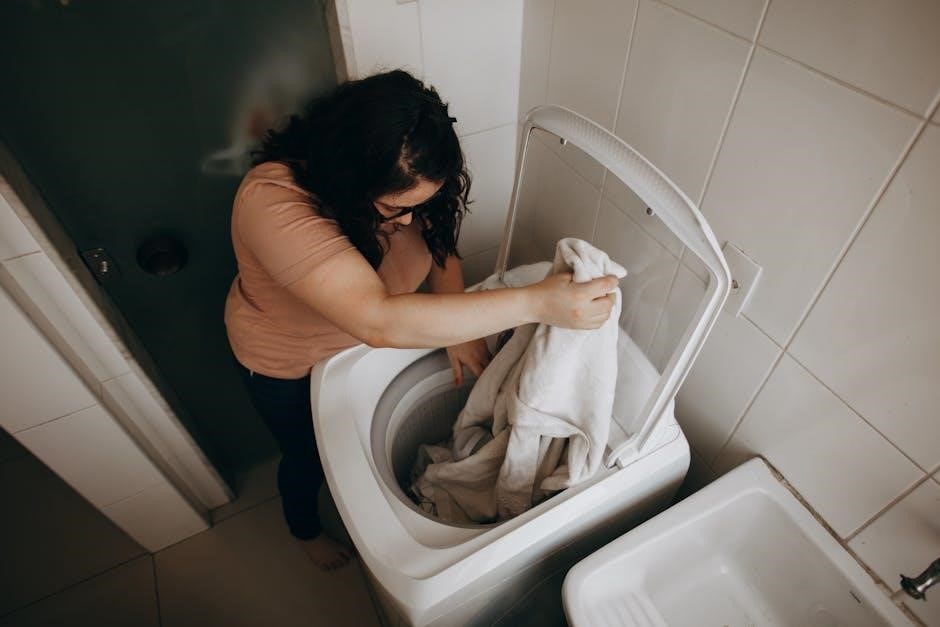
Your GE top load washer utilizes advanced sensor technology to optimize each wash cycle. These sensors continuously monitor soil levels and detergent concentration throughout the wash and rinse processes. This data allows the washer to adjust wash times and water usage, ensuring efficient cleaning and resource conservation.
During the load sensing portion, the washer determines the load size and adjusts water levels accordingly. Soil sensors detect the amount of dirt and grime, modifying wash times for optimal cleaning. Detergent sensors help prevent over-sudsing and ensure effective detergent distribution.

These sensors work in tandem to deliver a customized wash experience. The system dynamically adapts to each load, maximizing cleaning performance while minimizing water and energy consumption. Refer to the technical service guide for specific sensor locations and diagnostic information.
Technical Specifications (Based on 27 Inch Models)
These specifications pertain to commonly found 27-inch GE top load washer models, though variations exist. Dimensions typically range around 27 inches in width, with depth and height varying slightly by specific model. Standard voltage is 120V, 60Hz, and power consumption averages between 350-500 watts during operation.
Water consumption varies based on cycle selection and load size, ranging from approximately 13 to 25 gallons per cycle. Capacity generally falls between 3.8 and 5.0 cubic feet. The washer incorporates multiple GE-engineered components, including a robust motor and durable stainless steel wash basket.
Connectivity features, if present, utilize standard Wi-Fi (2.4 GHz). Weight typically ranges from 180 to 220 pounds. Always consult the specific model’s documentation for precise specifications, as features and performance can differ. Refer to the January 2018 technical service guide for detailed component information.