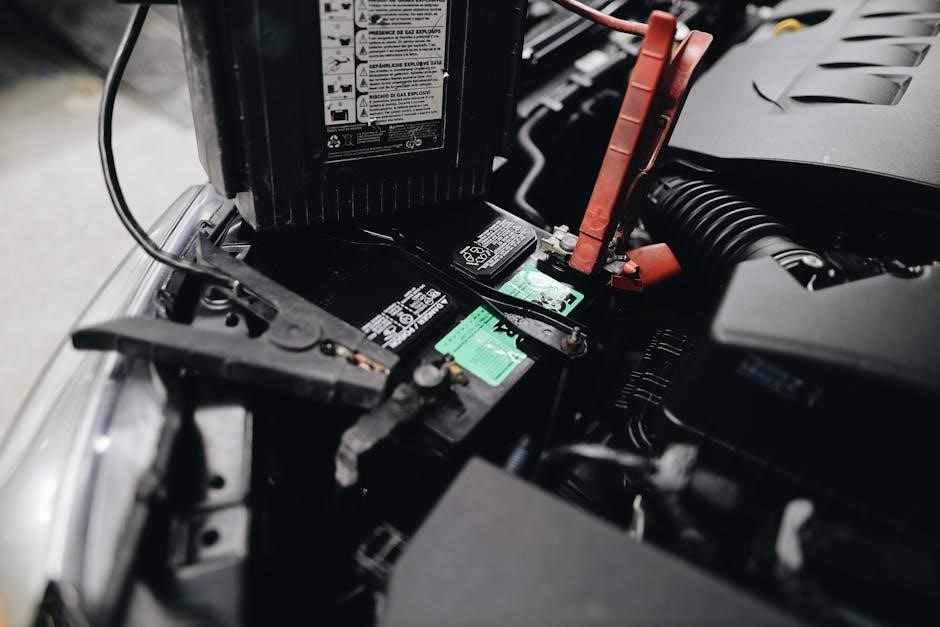
pdf printable lithium battery label
The rise of electric vehicles and portable devices fuels a critical need for standardized, printable lithium battery labels․ These labels, often created as PDFs,
must clearly communicate vital safety and regulatory information for secure transport and handling․
Effective labeling is paramount, especially with evolving EPA guidance and stringent transportation requirements like UN 38․3 and IATA regulations․
Accurate PDF labels ensure compliance and mitigate risks throughout the supply chain․
The Growing Need for Clear Labeling
The proliferation of lithium-ion batteries, driven by the surge in electric vehicles (EVs), forklifts, and portable electronics, has dramatically increased the demand for robust and easily understandable labeling․ This isn’t merely a matter of convenience; it’s a critical safety and regulatory imperative․
As technologies transition to electric power, the volume of batteries moving through supply chains is escalating exponentially․ Consequently, the potential for incidents related to improper handling, storage, or transportation rises proportionally․ Clear, concise labeling, particularly utilizing PDF printable formats, becomes the first line of defense against these risks․
Recent actions by the U․S․ Environmental Protection Agency (EPA), issuing a non-binding Memorandum on Lithium Battery management, underscore this growing concern․ While currently guidance, it signals a heightened focus on battery safety and responsible disposal․ Airlines, like Jeju Air, are already implementing enhanced procedures, including passenger consent regarding lithium battery regulations during check-in, demonstrating the industry’s proactive response․
The complexity of regulations – encompassing EPA guidelines, UN 38․3 transportation standards, and IATA Dangerous Goods Regulations – necessitates labels that are not only informative but also readily accessible and interpretable by all stakeholders․ PDF printable labels offer a versatile solution, allowing for consistent formatting and easy distribution across various platforms․
Scope of This Article: PDF Printable Labels

This article focuses specifically on the creation and implementation of PDF printable labels for lithium batteries, addressing the increasing complexities of regulations and the growing need for standardized communication․ We will delve into the practical aspects of designing labels suitable for various printing methods and label stocks, ensuring durability and legibility․
Our exploration will not encompass a comprehensive overview of all lithium battery regulations, but rather concentrate on the information required to be displayed on the label itself, aligning with current EPA guidance (as of 2026), UN 38․3 transportation requirements, and IATA Dangerous Goods Regulations․ We will examine the critical data points – battery type, Watt-hour rating, UN number, and proper shipping name – and how to present them effectively․
Furthermore, we will investigate software options available for label creation, discussing features that facilitate compliance and streamline the design process․ Considerations for label dimensions, format requirements, and the integration of barcodes and QR codes for enhanced tracking will also be addressed․
This article aims to provide a practical guide for businesses and individuals involved in the shipping, handling, and transportation of lithium batteries, empowering them to create compliant and informative PDF printable labels that prioritize safety and regulatory adherence․

Understanding Lithium Battery Regulations
Navigating lithium battery transport feels complex, especially with the energy transition and increasing electric vehicle adoption․ EPA guidance, UN 38․3, and IATA rules dictate strict labeling for safe handling and shipping․
EPA Regulations and Guidance (as of 2026)

As of March 24, 2026, the U․S․ Environmental Protection Agency (EPA) is actively addressing the surge in lithium-ion batteries due to the expanding electric vehicle market․ While current EPA guidance is largely non-binding, a recent memorandum highlights the increasing importance of responsible battery management throughout their lifecycle․
This guidance focuses on promoting safety and environmental protection related to the handling, storage, transportation, and disposal of lithium batteries․ The EPA emphasizes the need for clear and consistent labeling to facilitate proper identification and handling by all stakeholders – from manufacturers and shippers to transporters and recyclers․
Specifically, the EPA is encouraging the adoption of standardized labeling practices that align with international regulations like UN 38․3 and IATA Dangerous Goods Regulations․ This includes prominently displaying critical information such as battery type, Watt-hour (Wh) rating, UN number, and proper shipping name on PDF printable labels․
Looking ahead, the EPA is exploring potential future regulations, including deposit schemes for batteries and rechargeable batteries, similar to those already implemented in some regions․ These schemes aim to incentivize responsible recycling and reduce the environmental impact of battery waste․ The agency recognizes the need for a comprehensive approach to battery management, and clear labeling is a foundational element of that strategy․
UN 38․3 Transportation Requirements

The United Nations (UN) 38․3 manual of tests and criteria is a cornerstone of global lithium battery transportation safety․ It establishes a rigorous testing regime to ensure batteries can withstand the stresses encountered during shipping – including altitude, temperature, vibration, shock, and external short circuits․
Compliance with UN 38․3 is mandatory for most lithium batteries transported by air, sea, or land․ This necessitates comprehensive testing and documentation, with results summarized on the battery label, often generated as a PDF for printability․ Key information derived from these tests must be clearly visible․
PDF printable labels must accurately reflect the battery’s classification based on UN 38․3 testing․ This includes the appropriate UN number (UN3090 for lithium-ion, UN3091 for lithium polymer), proper shipping name, and hazard class․ The label serves as a critical communication tool for handlers․
Furthermore, the UN 38․3 standard dictates specific labeling requirements regarding orientation arrows and cautionary markings․ These elements are vital for ensuring batteries are handled correctly throughout the transportation process․ Accurate and durable PDF labels are essential for demonstrating compliance and preventing incidents during transit, contributing to a safer supply chain․
IATA Dangerous Goods Regulations
The International Air Transport Association (IATA) Dangerous Goods Regulations (DGR) are paramount for air transport of lithium batteries․ These regulations build upon the UN 38․3 testing requirements, adding specific stipulations for packaging, marking, and documentation when shipping by air․
IATA DGR mandates that all lithium batteries, regardless of size or type, be clearly labeled with specific information․ This information, often presented on a PDF printable label, includes the UN number, proper shipping name, and hazard labels corresponding to the battery’s classification․
PDF label design must adhere to strict IATA guidelines regarding size, durability, and legibility․ The label must be able to withstand the rigors of air transport, remaining affixed and readable throughout the journey․ Incorrect or missing information can lead to shipment delays or rejection․
Moreover, IATA regulations differentiate between batteries shipped with equipment and those shipped alone․ This distinction impacts labeling requirements, with batteries packed with equipment often requiring a different label format․ Accurate PDF label generation, reflecting these nuances, is crucial for compliance and safe air transportation of lithium batteries․

Key Information Required on Lithium Battery Labels
Essential PDF labels must display battery type (ion, polymer), Watt-hour (Wh) rating, and the correct UN number (UN3090/UN3091)․
The proper shipping name is also vital for safe handling and regulatory adherence․
Battery Type (Lithium-ion, Lithium Polymer, etc․)
Clearly identifying the specific lithium battery type on your PDF printable label is fundamental for safety and compliance․ This isn’t merely a technical detail; it directly impacts handling procedures, emergency response protocols, and adherence to transport regulations․ Common types include Lithium-ion (Li-ion), Lithium Polymer (LiPo), and Lithium Metal – each possessing unique characteristics and hazard profiles․
The label must explicitly state the battery chemistry․ Ambiguity can lead to incorrect handling, potentially resulting in thermal runaway or other hazardous situations․ For instance, LiPo batteries, often found in drones and smaller devices, require different handling precautions than larger Li-ion batteries used in electric vehicles․
Accurate categorization is crucial for compliance with regulations like UN 38․3 and IATA Dangerous Goods Regulations․ These standards often have specific requirements based on battery type․ The PDF label should use standardized terminology to avoid confusion․ Furthermore, including this information facilitates proper disposal and recycling processes, aligning with growing environmental concerns and potential future deposit schemes for batteries․
Consider adding a visual indicator alongside the text description for quick identification․ This enhances clarity, especially during inspections or in emergency situations․ A well-designed PDF label, with a clear indication of battery type, is a cornerstone of responsible lithium battery management․
Watt-hour (Wh) Rating
The Watt-hour (Wh) rating is a critical piece of information that must be prominently displayed on your PDF printable lithium battery label․ This value dictates the battery’s energy capacity and directly influences transportation regulations and handling restrictions․ It’s a key determinant in classifying the battery as dangerous goods․
Calculating the Wh rating is essential: it’s determined by multiplying the battery’s voltage (V) by its amp-hour (Ah) capacity․ Regulations often impose different requirements based on Wh thresholds․ For example, batteries exceeding a certain Wh limit may be subject to more stringent packaging and labeling requirements for air transport․
The EPA’s recent guidance emphasizes the importance of accurate energy capacity information․ Incorrectly stated Wh ratings can lead to non-compliance and potential penalties․ Ensure the value on your PDF label precisely matches the battery’s specifications․
Clearly indicate the units (Wh) alongside the numerical value․ Avoid ambiguity and use a font size that ensures readability․ This information, combined with the battery type, allows for proper risk assessment and safe handling throughout the supply chain, especially considering evolving regulations and potential future deposit schemes․
UN Number (UN3090, UN3091, etc․)
The United Nations (UN) number is a four-digit code that identifies hazardous substances, and is mandatory on your PDF printable lithium battery label․ This number is crucial for emergency responders and transportation personnel, providing immediate information about the battery’s potential hazards․
Two primary UN numbers apply to lithium batteries: UN3090 for lithium-ion batteries and UN3091 for lithium metal batteries․ The correct UN number must be selected based on the battery’s chemistry․ Incorrect assignment can lead to severe regulatory violations and compromise safety․
The UN number must be clearly and prominently displayed on the label, typically preceded by “UN”․ Ensure sufficient contrast between the text and background for easy readability․ This is particularly important given the increasing volume of lithium batteries being shipped globally․
Compliance with UN 38․3 transportation requirements necessitates accurate UN number identification․ Airlines, like Jeju Air, are enhancing procedures to verify this information during check-in․ Future regulations, potentially including deposit schemes, will likely rely on accurate UN number identification for tracking and accountability․
Proper Shipping Name
The Proper Shipping Name (PSN) is a standardized description of the hazardous material, and is a critical component of your PDF printable lithium battery label․ It provides a universally recognized term for the battery type, facilitating safe handling and transportation across different modes and jurisdictions․
For lithium-ion batteries, the PSN is typically “Lithium ion batteries” or “Lithium ion polymer batteries”․ For lithium metal batteries, it’s “Lithium metal batteries”․ The specific PSN used must align with the selected UN number (UN3090 or UN3091) and the battery’s characteristics․
The PSN must be displayed in a clear, legible format on the label, following the regulations of the governing transport authority (IATA, DOT, etc․)․ Ambiguous or incorrect PSNs can cause delays, fines, and potentially dangerous mis-handling during shipment․
Navigating battery transportation feels complex, and the PSN is a key element in simplifying identification․ Enhanced regulations, such as those implemented by Jeju Air, emphasize verifying the PSN during passenger check-in․ Future deposit schemes for batteries will likely depend on accurate PSN information for tracking and responsible disposal․

Designing Printable PDF Labels
Creating compliant PDF labels requires specialized software and careful attention to detail․ Accurate dimensions, clear formatting, and integration of barcodes or QR codes are essential for tracking and regulatory adherence․
Software Options for Label Creation
Selecting the right software is crucial for generating accurate and compliant PDF lithium battery labels․ Several options cater to varying needs and budgets, ranging from user-friendly templates to sophisticated design platforms․
Popular choices include dedicated label design software like Bartender, NiceLabel, and Labeljoy․ These programs offer extensive customization features, barcode and QR code generation, and compatibility with various printers․ They often include pre-designed templates specifically for dangerous goods labeling, streamlining the process․
Alternatively, graphic design software such as Adobe Illustrator or CorelDRAW can be utilized, providing greater creative control but requiring more manual setup for compliance․ Microsoft Word or Google Docs, while less ideal, can be used for basic label creation with careful attention to formatting and font requirements․
For simpler needs, online label makers offer convenient, browser-based solutions․ However, verifying their compliance with specific regulations is essential․ Crucially, the chosen software must support PDF export to ensure compatibility across different systems and printers, maintaining label integrity throughout the supply chain․ Consider software that allows for batch printing to improve efficiency․
When evaluating options, prioritize features like data serialization, connectivity to databases, and the ability to generate labels that meet UN 38․3 and IATA standards․
Label Dimensions and Format Requirements
Precise label dimensions and formatting are non-negotiable for compliant lithium battery shipments․ Regulations don’t prescribe exact sizes, but legibility and durability dictate practical considerations․ Typically, labels should be sufficiently large to clearly display all required information – battery type, Watt-hour rating, UN number, and proper shipping name – without crowding․
A common size range is 100mm x 150mm (approximately 4in x 6in), but this can vary based on the amount of information needed․ Labels must be rectangular in shape and utilize a contrasting color scheme for optimal visibility․ Black text on a white or bright yellow background is frequently employed․
PDF format is preferred for its universal compatibility and ability to embed fonts, ensuring consistent appearance across different devices․ Resolution should be at least 300 DPI to guarantee sharp printing․
Font sizes must be legible, generally a minimum of 8pt for smaller text and 12pt for key identifiers․ Barcode and QR code dimensions should adhere to industry standards for reliable scanning․ The label material must be durable enough to withstand handling and environmental conditions during transport, resisting smudging and tearing․
Always consult the latest IATA Dangerous Goods Regulations and relevant national regulations for specific guidance․
Barcode and QR Code Integration for Tracking
Integrating barcode and QR code technology into printable lithium battery labels significantly enhances tracking and supply chain visibility․ These codes provide a digital link to crucial battery information, streamlining logistics and improving safety protocols․
Barcodes, traditionally used for inventory management, offer a cost-effective solution for basic tracking․ However, QR codes offer superior data capacity, enabling storage of detailed information like manufacturing date, batch number, Watt-hour rating, and even safety data sheets (SDS)․
When embedding codes into PDF labels, ensure they meet industry standards (e․g․, Code 128 for barcodes, and appropriate error correction levels for QR codes) for reliable scanning․ The codes must be printed with sufficient contrast and resolution to guarantee readability by various scanners․
Data encoded within the QR code can be linked to a centralized database, allowing stakeholders to access real-time information throughout the battery’s lifecycle․ This is particularly valuable for managing recalls, verifying authenticity, and complying with evolving regulations․ Jeju Air’s implementation of enhanced lithium battery regulations highlights the growing need for robust tracking systems․
Consider utilizing unique identifiers for each battery to facilitate precise tracking and accountability․

Compliance and Best Practices
Adhering to regulations and employing best practices are vital for lithium battery label compliance․ Durable, legible PDF labels are essential for safe transport,
considering passenger and cargo restrictions, and potential future deposit schemes․
Ensuring Label Durability and Legibility
Achieving label durability and legibility is paramount when utilizing PDF printable lithium battery labels․ The harsh conditions encountered during shipping – temperature fluctuations, abrasion, and potential exposure to liquids – demand robust label materials․ Selecting a synthetic label stock, rather than paper, significantly enhances resistance to tearing and fading․
Print quality is equally crucial․ Utilizing a laser printer, known for producing toner that fuses to the label stock, generally yields more durable results than inkjet printing, which can smudge or run when exposed to moisture․ Consider using a protective overlaminate to further safeguard the printed information from damage and UV exposure․
Legibility hinges on clear, concise printing with appropriate font sizes․ Regulatory markings, such as UN numbers and proper shipping names, must be easily readable by transport personnel and emergency responders․ Barcodes and QR codes, when integrated, should be scannable even with minor label imperfections․ Regular testing of printed labels under simulated shipping conditions is recommended to verify their continued legibility and adherence․
Furthermore, the adhesive used on the label must maintain its bond throughout the transportation process․ A strong, permanent adhesive is preferable, ensuring the label remains affixed to the battery packaging, providing continuous access to critical safety information․
Passenger and Cargo Transportation Considerations (Jeju Air Example)
Lithium battery transportation regulations significantly impact both passenger and cargo transport, demanding meticulous label adherence․ Airlines, like Jeju Air, are proactively adapting to increasingly stringent rules, particularly concerning portable electronic devices powered by lithium batteries․
Jeju Air’s recent implementation of a passenger consent procedure during check-in – via mobile phones and kiosks – highlights the growing emphasis on passenger awareness․ This process ensures travelers understand the regulations surrounding lithium battery carriage, potentially requiring declarations or restrictions based on battery type and watt-hour rating․
For cargo shipments, accurate and durable PDF printable labels are non-negotiable․ Shippers must ensure labels clearly display the UN number, proper shipping name, and hazard markings, conforming to IATA Dangerous Goods Regulations․ Mislabeling or inadequate labeling can lead to shipment delays, fines, or even rejection․
The evolving regulatory landscape necessitates continuous monitoring and adaptation․ Airlines and cargo carriers are increasingly scrutinizing battery packaging and labeling to mitigate the risk of in-flight incidents․ Proper labeling, therefore, isn’t merely a compliance issue; it’s a safety imperative for all stakeholders involved in the transportation process․
Deposit Schemes for Batteries (Potential Future Regulations)
The potential implementation of deposit schemes for batteries, including those containing lithium, represents a significant shift in waste management and recycling practices․ This emerging regulatory trend, observed since February 2024, aims to incentivize responsible battery disposal and boost recycling rates, impacting labeling requirements․
PDF printable labels may need to incorporate information related to deposit return values and designated collection points․ Clear labeling will be crucial for consumers to understand how to reclaim their deposits and participate in the scheme effectively․ This adds another layer of complexity to existing labeling standards․
Such schemes could also necessitate unique identifiers on labels, potentially utilizing barcodes or QR codes, to track batteries throughout their lifecycle – from purchase to disposal․ This traceability will aid in monitoring deposit recovery and verifying proper recycling processes․

Manufacturers and distributors will need to adapt their labeling processes to accommodate these new requirements․ Proactive adoption of flexible PDF label design software will be essential to quickly respond to evolving regulations and ensure compliance․ The future of battery labeling is poised to become more dynamic and information-rich․