
becker’s world of the cell 10th edition pdf
Becker’s World of the Cell, 10th Edition, stands as a premier resource, offering comprehensive cellular biology insights; a digital PDF version is widely accessible.
Overview of the Textbook
Becker’s World of the Cell, 10th Edition, presents a meticulously crafted exploration of cell biology, designed for advanced undergraduate and graduate students. The textbook comprehensively covers foundational principles, cutting-edge research, and emerging technologies within the cellular realm. A readily available PDF version facilitates convenient study and access to its rich content.
This edition builds upon the established strengths of previous iterations, offering a visually engaging learning experience through updated illustrations and diagrams. It delves into the intricate details of cell structure, function, metabolism, and communication, providing a holistic understanding of cellular processes. The text emphasizes the dynamic nature of cellular biology, highlighting the latest discoveries and their implications. Students will find a robust framework for comprehending the complexities of life at the cellular level, preparing them for future endeavors in biological sciences.
Target Audience and Prerequisites
Becker’s World of the Cell, 10th Edition, primarily targets advanced undergraduate students majoring in biology, biochemistry, and related life sciences. It’s also suitable for introductory graduate-level courses. Accessing the textbook as a PDF enhances its usability for diverse learning styles and environments.
Prerequisites include a solid foundation in general chemistry, introductory biology, and ideally, some exposure to organic chemistry. While not strictly required, familiarity with basic genetics will prove beneficial. The text assumes a level of scientific literacy and analytical thinking. Students should be comfortable interpreting graphs, understanding scientific terminology, and engaging with complex biological concepts. A willingness to delve into detailed explanations and embrace the intricacies of cellular processes is essential for success with this comprehensive resource.
Core Concepts Covered in the 10th Edition
Becker’s World of the Cell, 10th Edition, comprehensively explores cell structure, function, biomolecules, metabolism, and genetics—available as a convenient PDF.
Cell Structure and Function
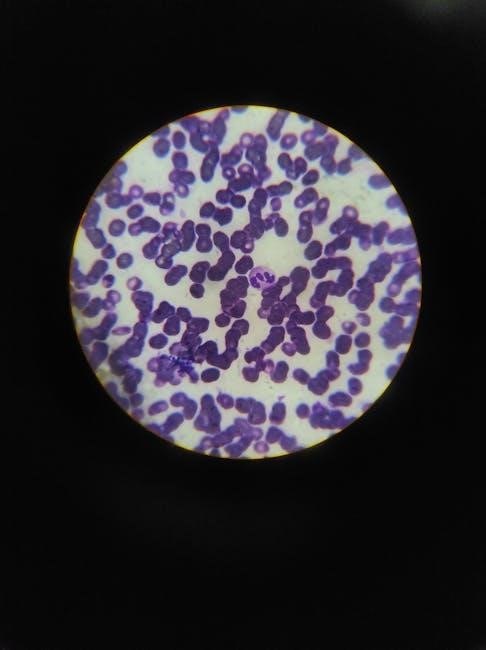
Becker’s World of the Cell, 10th Edition, delivers an in-depth exploration of cellular architecture, meticulously detailing the intricate components that define life’s fundamental units. This section, readily accessible within the PDF version, begins with a foundational understanding of cell theory and progresses through the examination of prokaryotic and eukaryotic cell types.
Students will delve into the structures and functions of key organelles – the nucleus, endoplasmic reticulum, Golgi apparatus, mitochondria, lysosomes, and more – understanding their coordinated roles in cellular processes. The textbook emphasizes the relationship between structure and function, illustrating how each component’s unique morphology contributes to its specific task.
Furthermore, the PDF provides detailed coverage of the cell membrane, its composition, and its crucial role in regulating transport and maintaining cellular homeostasis. Advanced topics, such as the cytoskeleton and extracellular matrix, are also thoroughly addressed, providing a holistic view of cell structure and its dynamic interplay with the surrounding environment.
Biomolecules: Proteins, Carbohydrates, Lipids, and Nucleic Acids
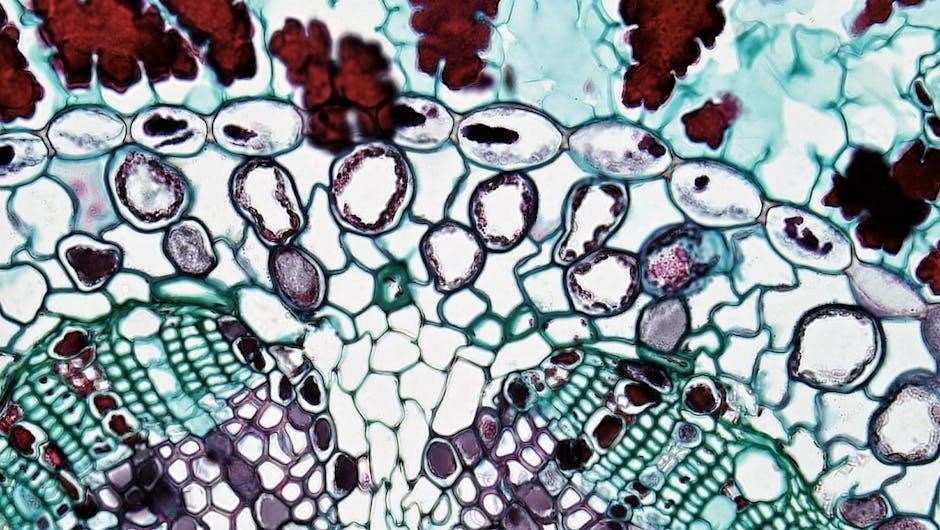
Becker’s World of the Cell, 10th Edition, dedicates significant attention to the essential biomolecules that underpin all life processes, comprehensively covered within the accessible PDF format. This section begins with a detailed examination of protein structure – from amino acid building blocks to complex tertiary and quaternary arrangements – and their diverse functions as enzymes, structural components, and signaling molecules.
Carbohydrates are explored, detailing their roles in energy storage, structural support, and cell recognition. Lipids, including fats, phospholipids, and steroids, are analyzed for their energy storage capacity and membrane-forming properties.
Finally, the PDF provides a thorough overview of nucleic acids – DNA and RNA – emphasizing their structure, replication, and roles in genetic information storage and protein synthesis. The textbook highlights the interconnectedness of these biomolecules and their collaborative roles in maintaining cellular function and life itself.
Cellular Metabolism: Energy Production and Utilization
Becker’s World of the Cell, 10th Edition, meticulously details cellular metabolism, the intricate network of chemical reactions that sustain life, readily available within the comprehensive PDF version. The text begins with a thorough exploration of glycolysis, the citric acid cycle, and oxidative phosphorylation – the core pathways for ATP production.
It further examines how cells harvest energy from carbohydrates, fats, and proteins, emphasizing the role of enzymes and cofactors in regulating these processes.
Anabolic pathways, responsible for building complex molecules, are also covered, showcasing the balance between energy production and utilization. The PDF clarifies how metabolic pathways are interconnected and regulated to meet the cell’s dynamic energy demands, ensuring optimal function and survival. This section provides a foundational understanding of bioenergetics.
Key Updates and Changes in the 10th Edition
Becker’s World of the Cell, 10th Edition, now in PDF format, features updated research, revised visuals, and expanded coverage of cutting-edge technologies.
New Research Findings Incorporated
Becker’s World of the Cell, 10th Edition, available as a convenient PDF, meticulously integrates the latest breakthroughs in cellular and molecular biology. This edition reflects significant advancements in understanding cellular processes, incorporating discoveries related to genome editing technologies like CRISPR-Cas9 and their implications for gene therapy.
Furthermore, the text now includes expanded coverage of the microbiome’s influence on cellular function and human health, alongside updated research on cellular signaling pathways and their roles in disease development. The PDF version ensures students have access to the most current information regarding immunotherapy and the complexities of cancer biology.
Recent findings on protein folding, cellular senescence, and the dynamic nature of the nuclear genome are also thoroughly explored, providing a comprehensive and up-to-date perspective on the world of the cell.
Revised Illustrations and Diagrams
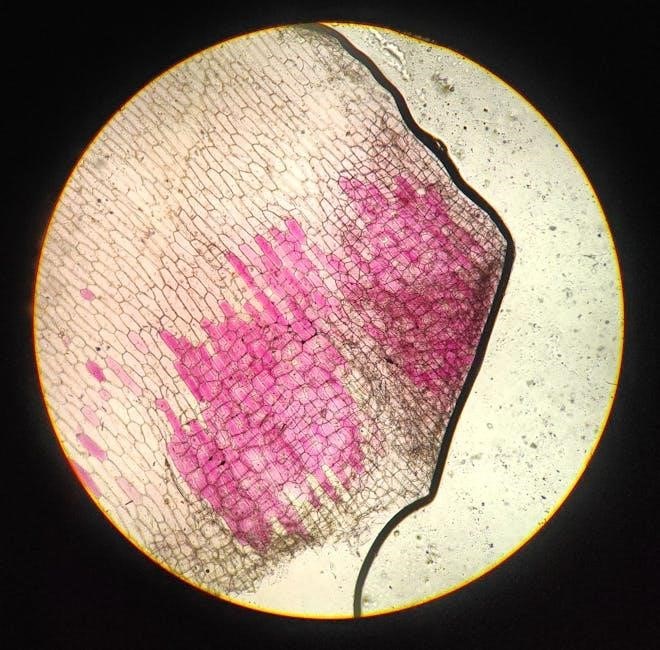
The Becker’s World of the Cell, 10th Edition, and its readily accessible PDF format, boasts significantly enhanced visual elements designed to improve comprehension and engagement. All illustrations have been meticulously revised, utilizing cutting-edge techniques to provide clearer, more detailed depictions of cellular structures and processes.
New 3D renderings offer a dynamic perspective on complex molecular interactions, while updated diagrams simplify intricate pathways like DNA replication and protein synthesis. The PDF version allows for easy zooming and annotation of these visuals.
Color schemes have been refined for improved clarity, and key components are now highlighted for easier identification. These revisions aim to make the learning experience more intuitive and effective, solidifying understanding of core concepts.
Updated Coverage of Emerging Technologies
Becker’s World of the Cell, 10th Edition, available as a convenient PDF, integrates the latest advancements in cellular biology and related technologies. This edition expands coverage of CRISPR-Cas9 gene editing, detailing its mechanisms and applications in research and potential therapies.
New sections explore the role of advanced microscopy techniques, such as super-resolution imaging, in visualizing cellular structures with unprecedented detail. The PDF format facilitates access to interactive animations demonstrating these technologies.
Furthermore, the text incorporates discussions on single-cell sequencing and its impact on understanding cellular heterogeneity. These updates ensure students are equipped with knowledge of the tools shaping the future of cell biology.
Specific Chapters and Their Significance
Becker’s World of the Cell, 10th Edition, in PDF format, features key chapters on cell communication, the cell cycle, and molecular genetics, crucial for understanding life.
Chapter on Cell Communication
Becker’s World of the Cell, 10th Edition, comprehensively explores cell communication within a dedicated chapter, readily available in PDF format. This section details the intricate mechanisms cells employ to interact with their environment and each other, covering topics like signal transduction pathways, receptor types – including G protein-coupled receptors and tyrosine kinases – and the diverse signaling molecules involved.
The chapter elucidates how these communication processes regulate crucial cellular functions, such as growth, differentiation, and metabolism. It emphasizes the importance of cellular communication in maintaining homeostasis and coordinating complex biological processes. Students gain insight into the consequences of disrupted signaling, leading to diseases like cancer and autoimmune disorders. The PDF version allows for detailed study of illustrative diagrams showcasing signaling cascades and receptor-ligand interactions, enhancing comprehension of this fundamental aspect of cellular biology.
Chapter on Cell Cycle and Division
Becker’s World of the Cell, 10th Edition, dedicates a robust chapter to the cell cycle and division, accessible in a detailed PDF format. This section meticulously outlines the phases of the cell cycle – G1, S, G2, and M – and the precise regulatory mechanisms governing progression through each stage. It delves into the roles of cyclins, cyclin-dependent kinases (CDKs), and checkpoints in ensuring accurate DNA replication and segregation.
The chapter thoroughly explains the processes of mitosis and meiosis, highlighting their differences and significance in growth, repair, and reproduction. Students will explore the molecular events driving chromosome condensation, spindle formation, and cytokinesis. The PDF version provides clear illustrations of each stage, aiding visualization of these complex processes. Furthermore, it examines the consequences of cell cycle dysregulation, particularly its link to cancer development, offering a comprehensive understanding of this vital cellular function.
Chapter on DNA Replication, Transcription, and Translation
Becker’s World of the Cell, 10th Edition, presents an in-depth exploration of the central dogma of molecular biology – DNA replication, transcription, and translation – readily available within the comprehensive PDF. This chapter meticulously details the enzymatic machinery involved in accurately duplicating the genome during replication, emphasizing the roles of DNA polymerase, ligase, and other key proteins.
It then transitions to transcription, explaining how DNA serves as a template for RNA synthesis, focusing on RNA polymerase and regulatory elements. Finally, the chapter elucidates the process of translation, where mRNA directs protein synthesis at the ribosome. The PDF includes detailed diagrams illustrating each step, from codon recognition to polypeptide chain elongation. Students gain a thorough understanding of gene expression, its regulation, and its crucial role in cellular function and heredity.
Becker’s Healthcare and its Relevance
Becker’s Healthcare utilizes HCAHPS data, and is a leading source for healthcare decision-makers; the PDF offers cellular biology foundations.
Hospital Consumer Assessment of Healthcare Providers and Systems (HCAHPS) Data
Becker’s Healthcare leverages Hospital Consumer Assessment of Healthcare Providers and Systems (HCAHPS) data from CMS to compile lists of highly recommended hospitals across each state. This data, reflecting patient perspectives on their hospital experiences, is crucial for informed healthcare decisions. While seemingly distant from the intricacies of cellular biology explored in Becker’s World of the Cell, 10th Edition – available as a PDF – understanding patient care quality is fundamentally linked to the health of individuals at a cellular level.
The ten HCAHPS measures provide valuable insights into aspects like communication with doctors and nurses, responsiveness of hospital staff, cleanliness, and pain management. These factors directly impact patient well-being and recovery, processes deeply rooted in cellular function. Accessing the PDF version of the textbook complements this understanding by providing the foundational biological knowledge necessary to appreciate the complexities of health and healing.
Mental and Behavioral Health Treatment Trends
Becker’s Healthcare reports that a significant 84% of primary care providers recognize their essential role in addressing the increasing demand for mental and behavioral health treatment within the U.S. This highlights a growing need for integrated healthcare approaches. While Becker’s World of the Cell, 10th Edition – readily available as a PDF – focuses on the fundamental building blocks of life, understanding the biological basis of mental health is paramount.
Neurotransmitters, neuronal pathways, and the impact of stress on cellular function are all concepts explored within the textbook’s scope. These cellular mechanisms underpin mental well-being. The PDF resource provides a crucial foundation for comprehending the physiological aspects of mental health conditions and the efficacy of various treatment modalities, bridging the gap between macro-level trends and micro-level biological processes.

Becker’s Restaurant (Hannover) ⎼ A Tangential Note
Becker’s in Hannover offers modern German cuisine, a delightful contrast to the cellular focus found within Becker’s World of the Cell, 10th Edition PDF.
Restaurant Overview and Cuisine
Becker’s Restaurant, located in Hannover, Germany, presents a sophisticated dining experience distinct from the intricate world explored in Becker’s World of the Cell, 10th Edition PDF. The restaurant distinguishes itself by serving modern German cuisine, subtly influenced by French culinary techniques. Guests are welcomed into an ambiance reminiscent of a classic, elegant bistro, fostering a relaxed yet refined atmosphere.
The menu at Becker’s is characterized by its seasonal variations, ensuring that dishes are prepared using the freshest ingredients available. This commitment to quality and seasonality reflects a dedication to providing a consistently exceptional dining experience. While Becker’s World of the Cell delves into the microscopic realm of biological processes, Becker’s Restaurant focuses on the macroscopic pleasure of expertly crafted meals. It’s a place for culinary enjoyment, a complete departure from academic study.
Contact Information and Operating Hours

For inquiries unrelated to the complexities detailed within Becker’s World of the Cell, 10th Edition PDF, Becker’s Restaurant in Hannover can be reached via email at infobeckers-hannover.de or by telephone at 0511 33 64 006. The restaurant is situated at Bödekerstraße 43, 30161 Hannover, Germany.
Becker’s Restaurant operates with specific hours to accommodate diners. Tuesday through Friday, the restaurant is open from 12:00 PM to 2:30 PM and again from 5:00 PM to 11:00 PM. On Saturdays, service is available from 5:00 PM to 11:00 PM. The restaurant remains closed on Mondays. Potential patrons are encouraged to contact the restaurant directly for reservations or to inquire about special events, ensuring a delightful experience separate from cellular biology studies.

Resources for Students Using the Textbook
Becker’s World of the Cell, 10th Edition students benefit from online learning tools, supplements, and readily available practice questions alongside the PDF.
Online Learning Tools and Supplements
Becker’s World of the Cell, 10th Edition, is powerfully enhanced by a suite of digital resources designed to deepen understanding and facilitate mastery of complex concepts. Students accessing the textbook, including the convenient PDF version, gain access to interactive animations that vividly illustrate cellular processes, bringing static images to life.
Furthermore, a robust online question bank provides ample opportunities for self-assessment, with questions ranging in difficulty to challenge learners at every level. Detailed solutions are provided, fostering a deeper comprehension of the underlying principles. The accompanying website also features glossary terms, allowing students to quickly define key vocabulary.
Instructors benefit from pre-made lecture slides and assessment materials, streamlining course preparation. These supplementary tools are invaluable for both independent study and classroom integration, maximizing the learning experience associated with this leading cellular biology textbook.
Study Guides and Practice Questions
To complement Becker’s World of the Cell, 10th Edition – including the readily available PDF format – a comprehensive range of study aids are offered to reinforce learning and prepare students for assessments. Dedicated study guides provide concise summaries of key concepts, chapter outlines, and self-testing exercises. These guides are structured to mirror the textbook’s organization, facilitating efficient review.
Beyond the study guides, a substantial collection of practice questions is available, encompassing multiple-choice, short answer, and problem-solving formats. These questions are designed to assess comprehension and application of the material, mirroring the types of questions encountered in examinations.
Answer keys with detailed explanations are included, enabling students to identify areas for improvement and solidify their understanding. Utilizing these resources alongside the textbook ensures a thorough and effective learning experience.